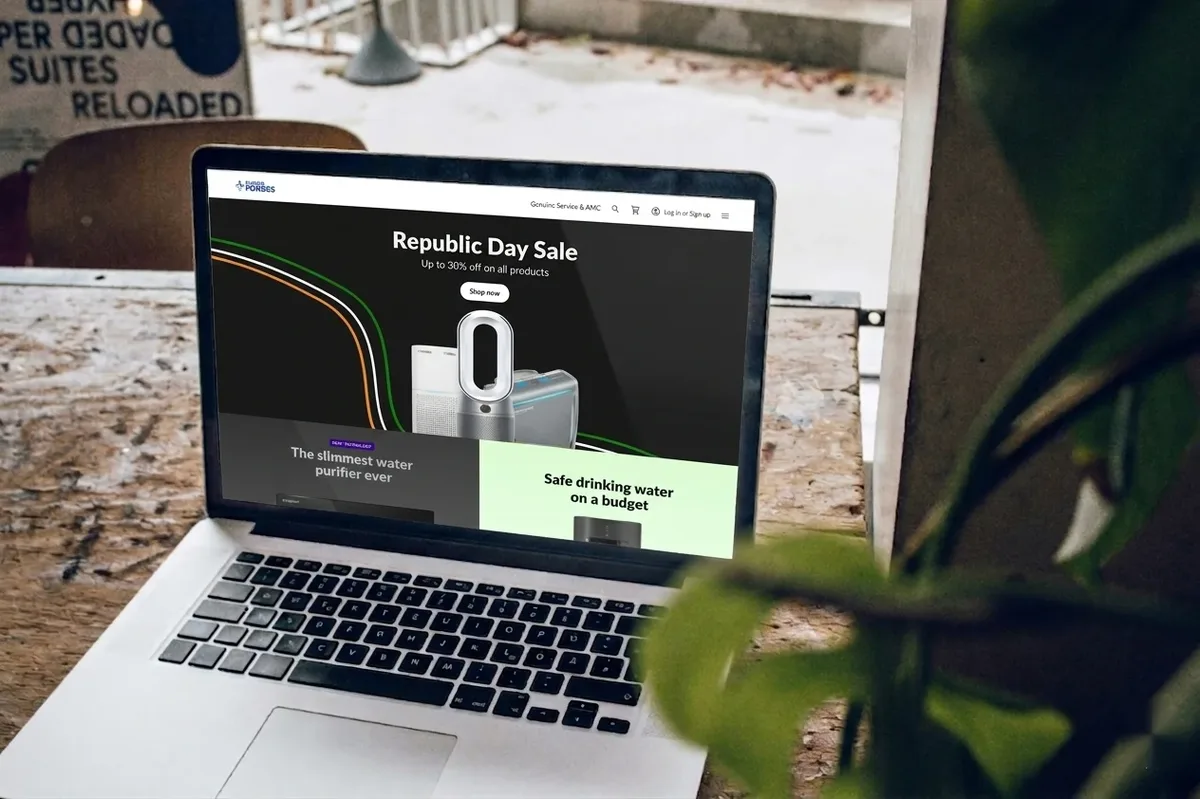
Eureka Forbes asked us to help them move from a direct-sales model built over decades to a digital-first commerce experience — without losing the trust and brand recognition that had made them a household name.
The digital presence was fragmented across six separate portals, each built at a different time with its own logic. The challenge was to pull everything into one coherent e-commerce platform without losing the brand equity that had been built over 40 years of physical selling.
The previous model had relied almost entirely on the salesperson relationship. For a new generation of buyers discovering the brand online for the first time, that trust had to be built through the product itself.
The challenge wasn't creating a new identity — it was translating an existing one into a medium it had never really lived in. Decades of brand equity existed in the physical product, the salesperson's relationship, and the annual service call.
I built a digital-first visual system anchored in the brand's existing signals: the deep navy, product-forward photography, and a tone of long-term reliability rather than transactional urgency.
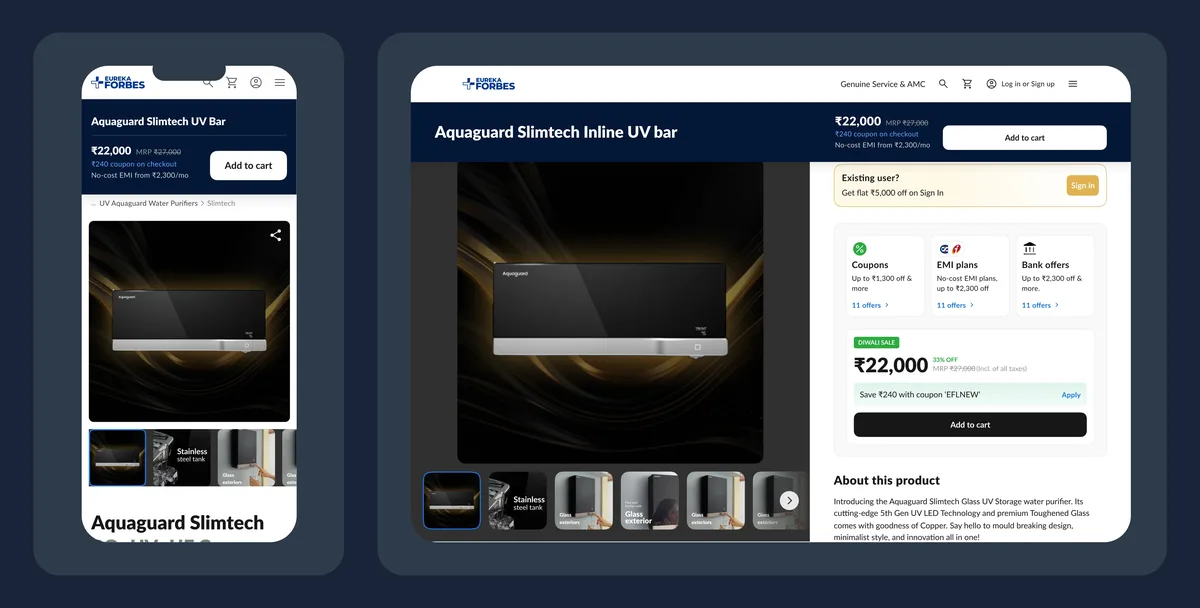
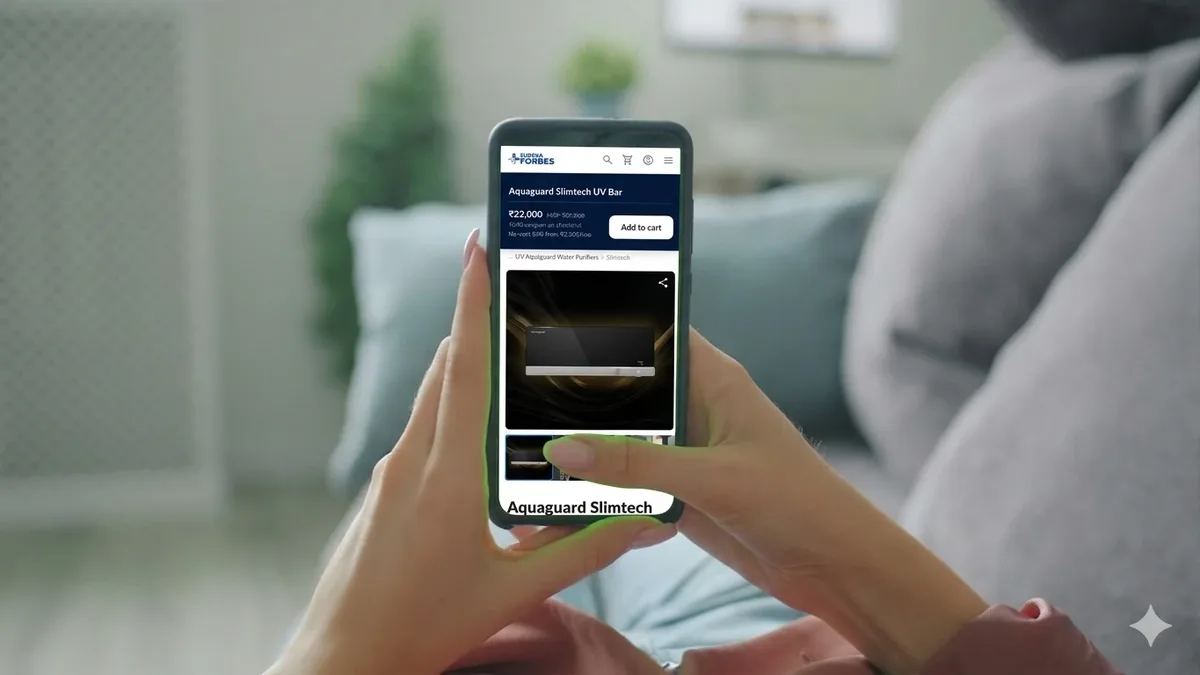
The hardest problem on the platform was the product detail page. A water purifier isn't a simple purchase — and the page had to carry that complexity without feeling complex. Technical specifications, certifications, purification technology. Bank offers, discounts, EMI options. Service plans, annual maintenance contracts, installation details. FAQs, comparison tools, reviews.
All of it on a single scroll. The challenge was to make each section feel like a natural next question answered — not a list of things the brand needed to say, but a conversation that moved a hesitant buyer toward confidence.
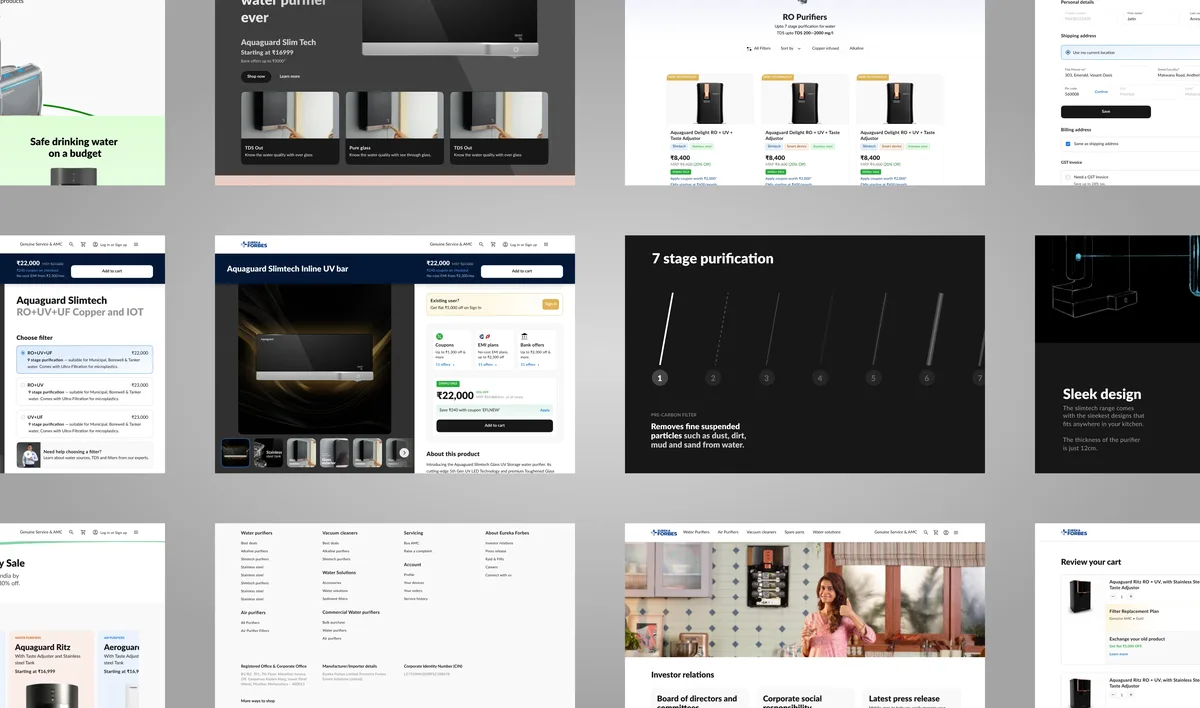
Eureka Forbes had a perception problem that predated the website. Decades as a door-to-door corporate brand had left it feeling utilitarian — trusted, but never aspirational. Their elite product lineup deserved better than the same template as the entry-level range.
I designed a series of premium landing pages for their flagship products — immersive, editorial in layout, built to feel closer to a luxury brand than a household appliance company. The centrepiece was 3D visualisation that let users see inside the product: how the filtration stages work, what sits behind the casing, what makes it worth the price. It turned a technical specification into something you could actually experience before buying.
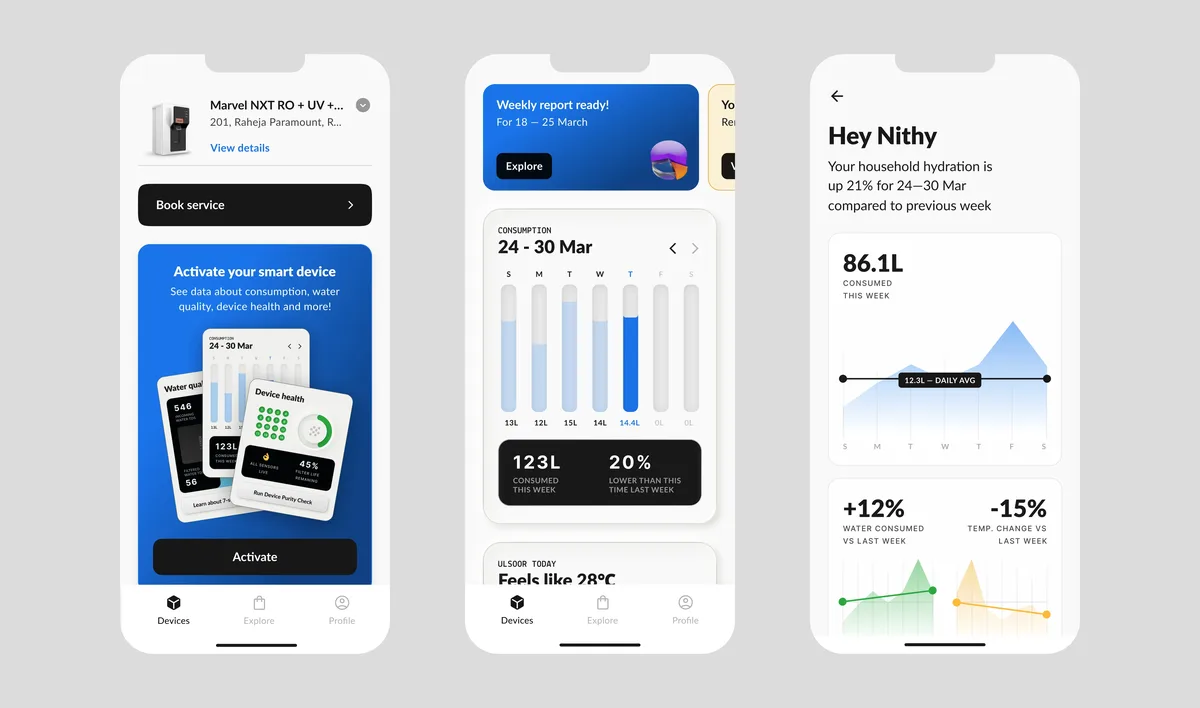
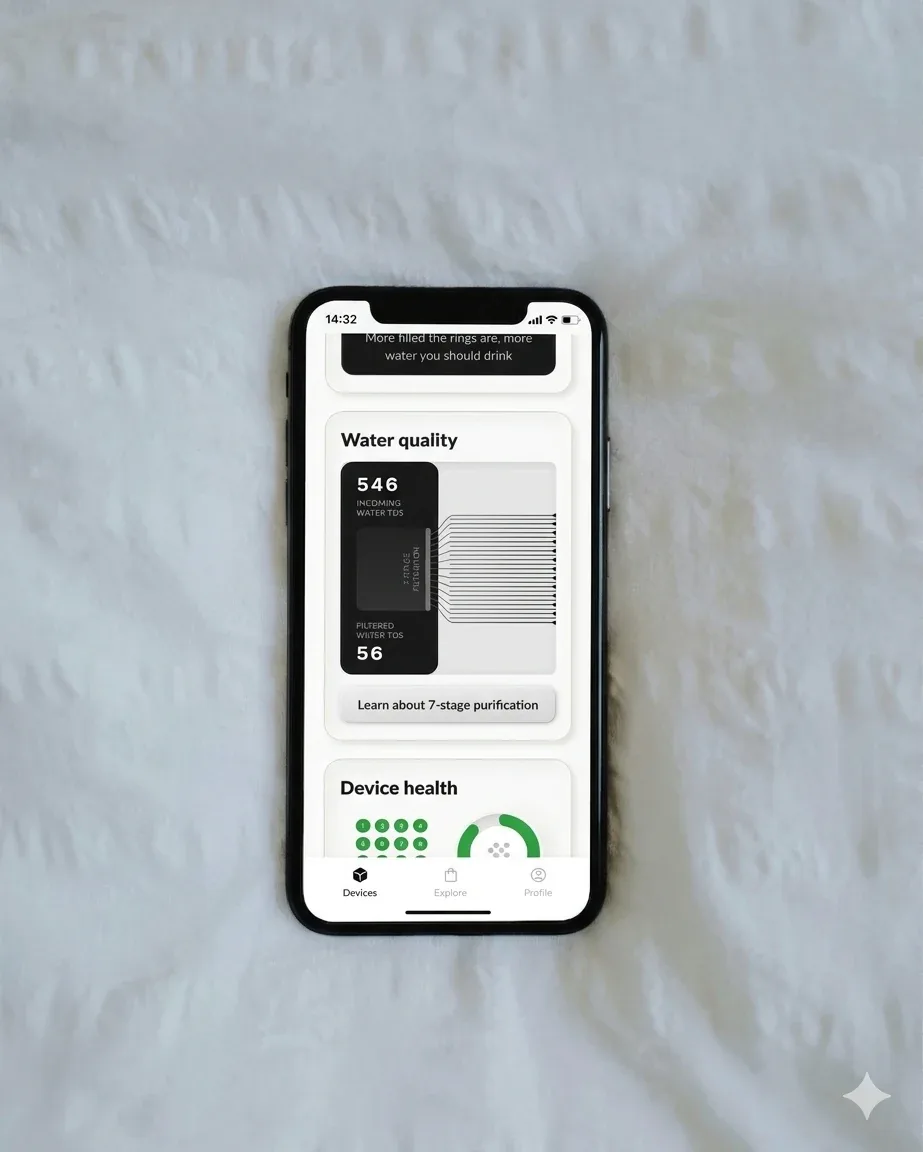
In parallel, Eureka Forbes was launching a new generation of IoT-enabled products — purifiers that could talk back. Filter life remaining, real-time water quality readings, daily and monthly consumption metrics, service reminders. Data that had always existed inside the product, now surfaced to the user for the first time.
I worked alongside my peers to design the app experience around these connected products. The challenge was making data feel useful rather than clinical — turning sensor readings into something a household would actually check. We built a dashboard that was calm by default but surfaced the right signal at the right moment: a filter nearing its limit, a quality dip worth knowing about, a usage pattern worth understanding.
It gave the app a reason to be opened beyond scheduling a service call — and gave the brand a foothold in a part of the home it had never really occupied before.
Conversion on product detail pages improved 31% in the first quarter — a direct result of leading with outcomes rather than specifications.
The platform became Eureka Forbes' highest-revenue sales channel within eight months, surpassing their legacy offline and portal channels.
Bounce rate on the homepage fell from 68% to 41% — users who came looking for a product now found themselves browsing a problem space they recognised.
Visit the live site: eurekaforbes.com ↗