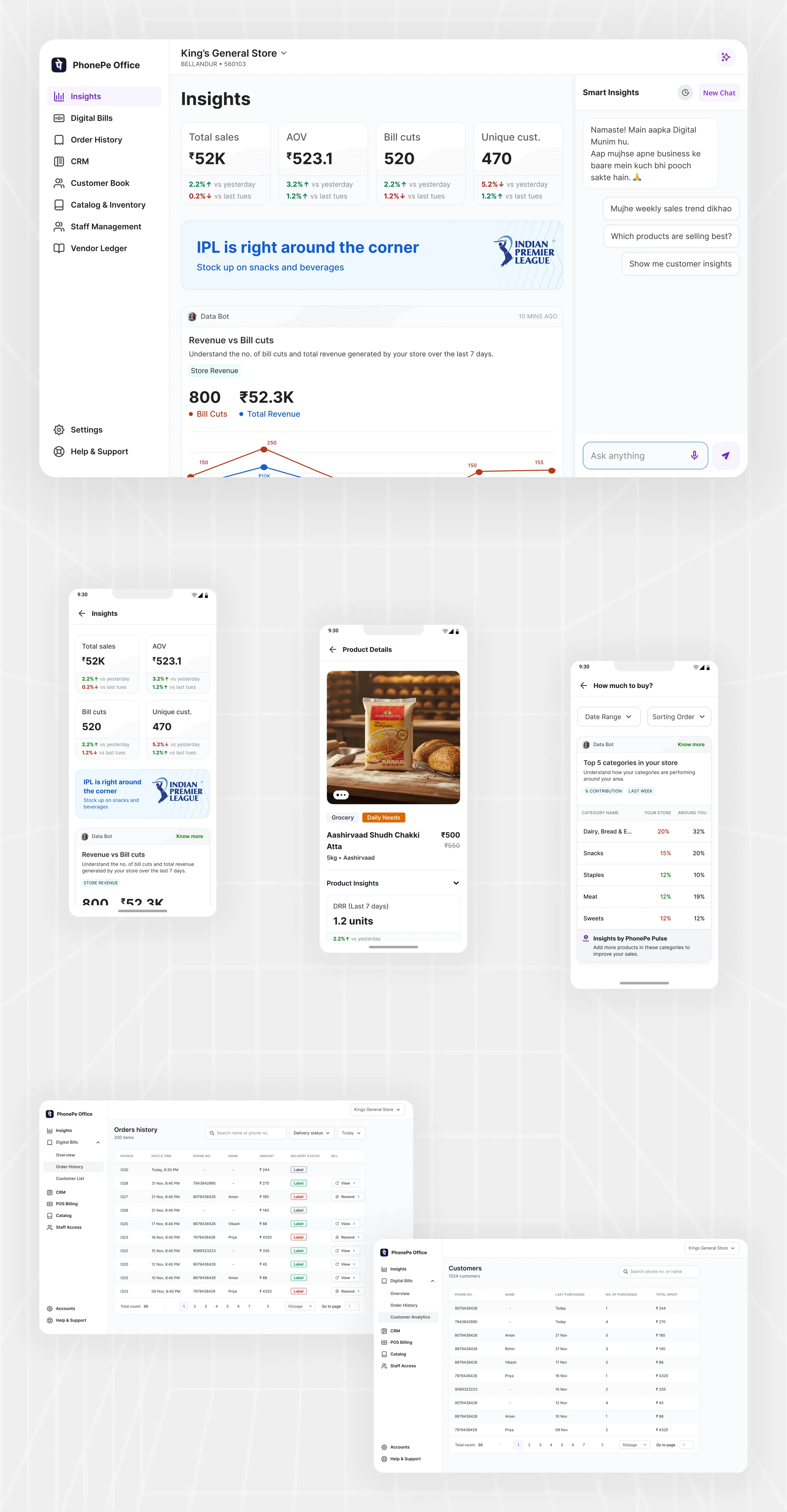
I worked on PhonePe for Business, a 0 to 1 digital operating system for over 40 million merchants across India, most of them kiranas and small offline stores. From January to July 2026 I owned the Insights product end to end, shaped the super app architecture, mentored another designer across the other surfaces, and built the design system underneath it all.
Roughly 80% of PhonePe's merchants are kiranas and small offline stores, already using the app to accept payments and track settlements. Billing, catalog management, WhatsApp invoicing and business insights had never existed for them, so every point of friction had to go and the value had to show from the first open. The other 20%, larger businesses like Namdharis, needed a product that could scale with them.
The product had to work across desktop and mobile without two design tracks, in an app built in Compose, which limited how UI could scale across screens. We needed a design system within a month to support development through Figma MCP, and it went through three changes over six months as team ownership shifted.
Before designing anything, I studied how merchants ran their days, the decisions they made, and what a useful tool could look like on a busy shop floor. That shaped both the product strategy and the design direction, and split the work into two parallel tracks: the product surfaces, and the design system that would make them consistent and fast to ship.
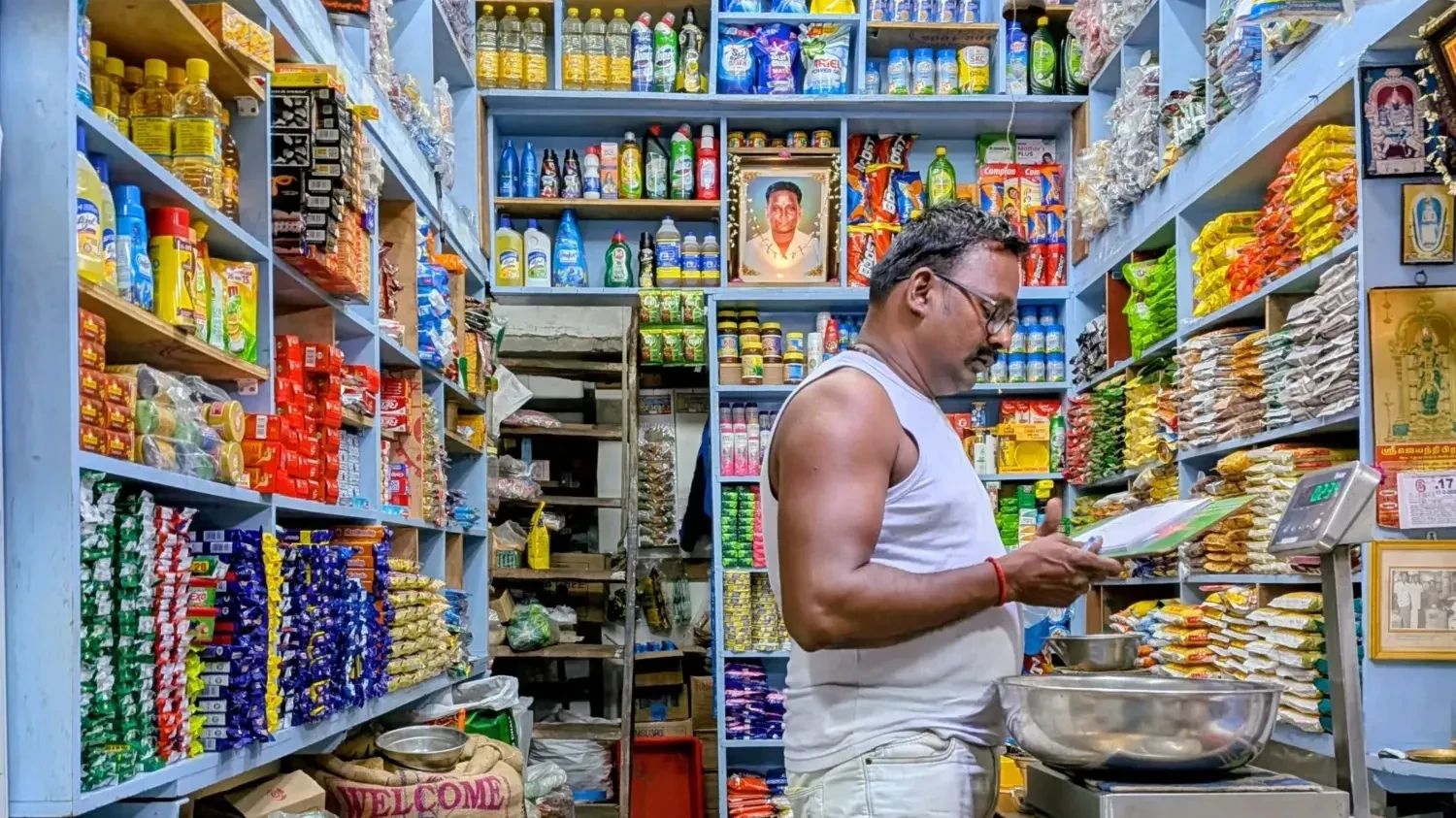
Most of my time went into architecture, not pixels. The real problem was structural: build one system that works for a merchant who's never used a business tool, and just as well for one running multiple stores who expects an actual ERP. Figma Make let me turn structural ideas into working, clickable prototypes almost as fast as I could think them through, so I could test a decision with real interaction instead of a flat frame.
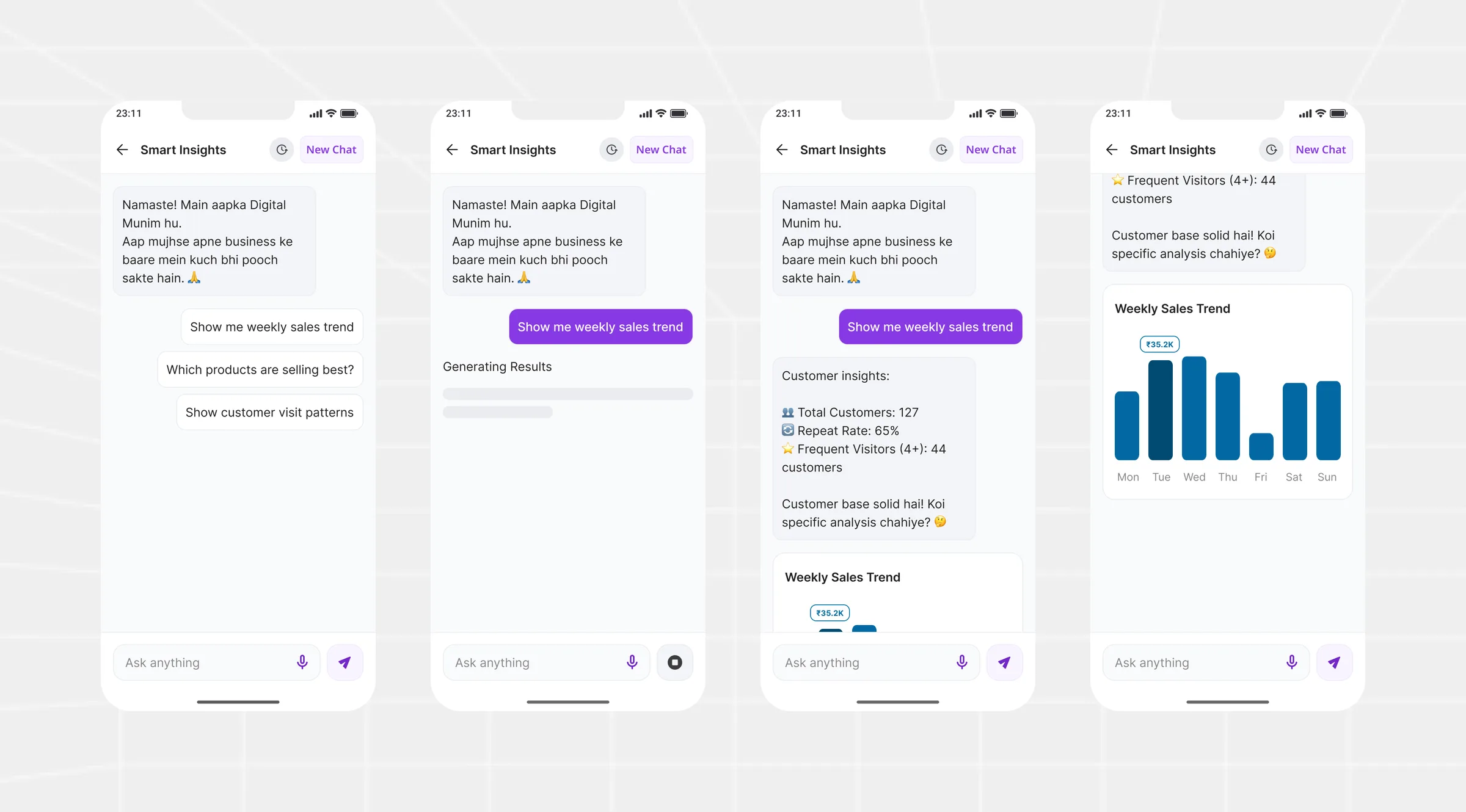
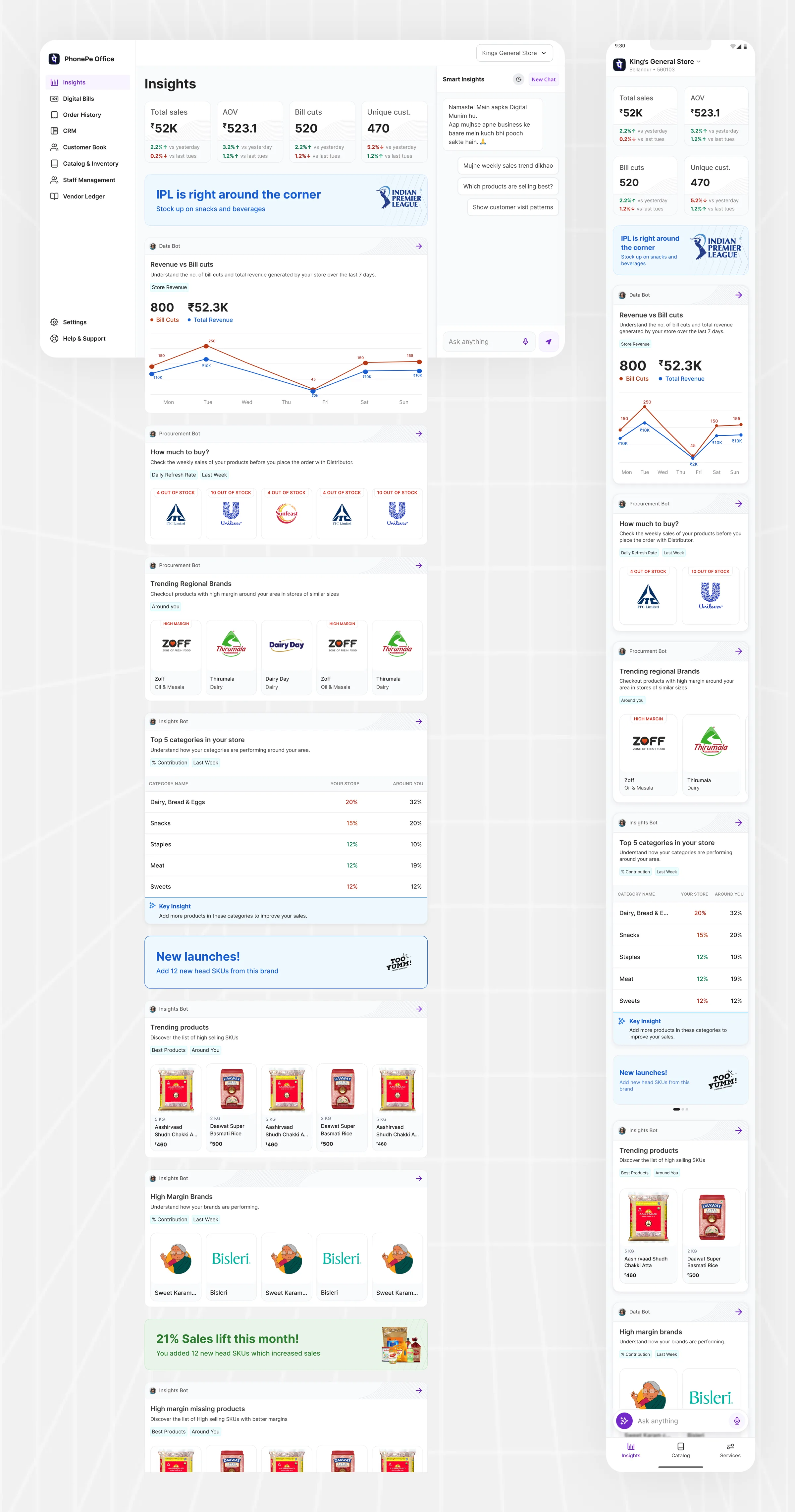
PhonePe had years of transaction data across its merchants, but it wasn't actionable, just readable. I designed an AI-first experience where merchants ask questions in their own language and get back rendered graphs, charts and a specific recommendation. Ask which product sells most on Sundays and you get a visual answer, plus a suggestion to stock more of it.
The app opens to a feed that updates daily or hourly, deliberately, so merchants have a reason to keep coming back. The hardest problem was a chart and graph repository flexible enough to scale to whatever the AI needed to render, built on open-source libraries.
As Insights took shape, that same thinking led me to redesign the homepage: surfacing more of a merchant's own store data instead of opening straight to transaction history. The hypothesis was simple, a merchant who could understand their store at a glance would open the app more often, not just check on a payment that had come in.
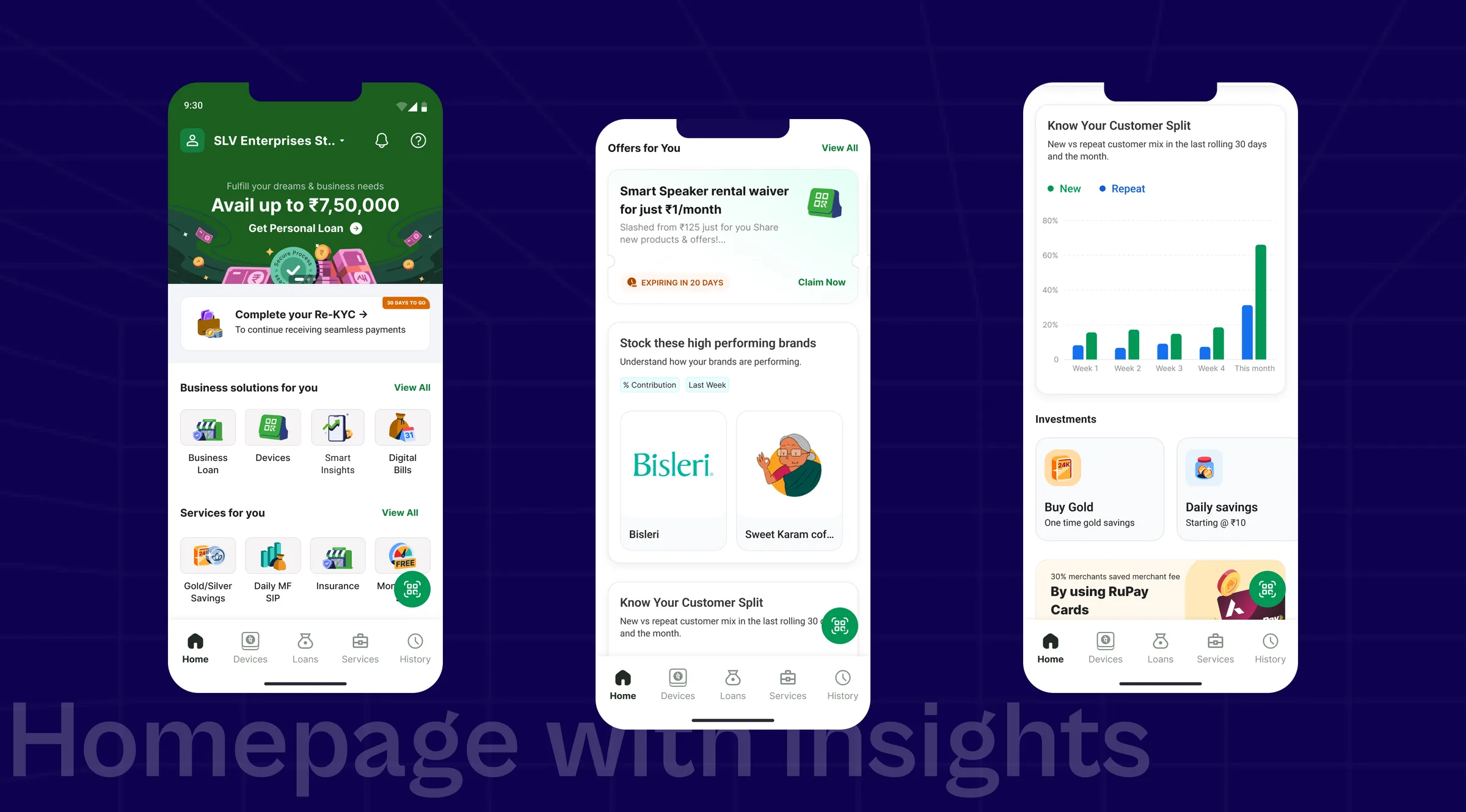
Beyond Insights, I helped shape the super app that brought WhatsApp billing, catalog management, subscriptions and Insights together under a single home, where the challenge was navigation and hierarchy for a merchant with very different jobs to do. I also mentored another designer who owned the billing, catalog and subscriptions surfaces, so different designers building different parts still shipped one product.
Rather than maintain separate desktop and mobile systems, I built one with components that scale proportionally with screen size, so elements adapt across breakpoints without being redesigned. It had to be ready within a month to support development through Figma MCP.
Colour was the trickiest part, since the same colours render differently on a Windows desktop and an Android phone. I built semantic theming deep into the system so colour decisions could change without cascading into engineering rework, which paid off across three design system changes with no impact on engineering timelines.
The product shipped in August 2026 to 100% of users: 45% adoption across the merchant base, 4,000 clicks a day on Insights and still rising, and app open rate up by at least 20% since the feed-driven homepage launched. It's since been merged into the PhonePe Business app, with more outcomes expected as rollout completes, and the design system is now the foundation other teams build on.